Why Remember? The Meaning of the Polish Resistance Today
In September 1939, Poland was wiped off the map — but not from the hearts of its people. Beneath the terror of occupation, an entire underground nation was born. Today, their story reminds us that freedom is not given — it is guarded, even in the darkest times.
🇵🇱 A Nation That Refused to Disappear
When Nazi Germany invaded Poland on 1 September 1939, followed by the Soviet Union from the east two weeks later, the Polish Republic ceased to exist as a state. But the idea of Poland — its culture, laws, and sense of identity — survived.
While the occupiers tried to erase every trace of independence, Poles quietly began to rebuild their nation in secret.
Out of this defiance emerged the Polish Underground State (Polskie Państwo Podziemne) — a unique phenomenon in wartime Europe.
It recreated an entire government structure beneath occupation: courts of law, education systems, a press, and, most famously, an army — the Armia Krajowa (Home Army) — loyal to the Polish Government-in-Exile in London.
By 1944, the Home Army had nearly 400,000 members, organized into 130 districts and more than 6,000 active platoons.
It carried out acts of sabotage, protected civilians, transmitted intelligence to the Allies, and prepared for a national uprising.
⛓️💥 The Moral Face of Resistance
The Polish resistance was more than a military movement; it was a moral and civic revolution.
In a world where truth was outlawed, Poles insisted on living according to their own principles: law, education, compassion, and loyalty to a free state.
Teachers held underground classes, risking execution.
Clandestine presses printed banned books and newspapers.
Couriers crossed occupied Europe carrying secret reports — among them Jan Karski, who brought eyewitness testimony of the Holocaust to the West.
This was resistance not only with weapons, but with values — proof that even in the face of total oppression, humanity could survive through integrity and courage.
🧱 The Tragedy of Warsaw
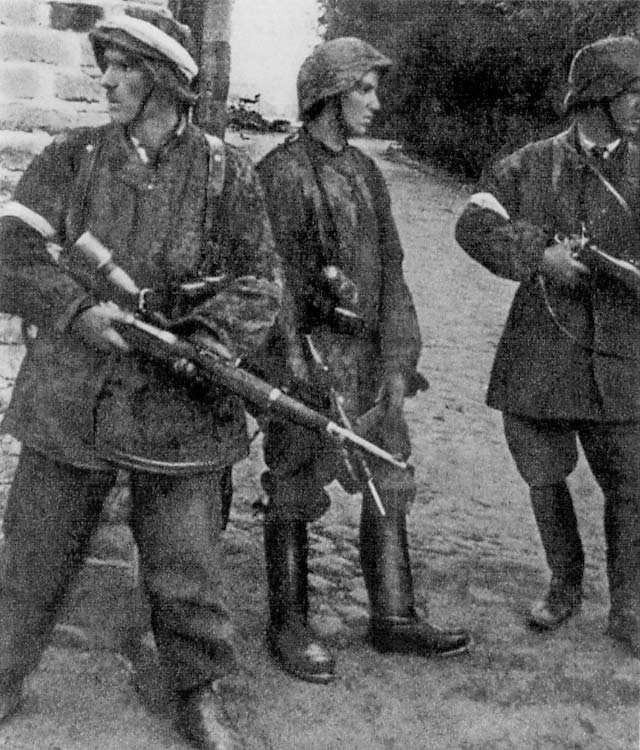
The story reached its most tragic chapter with the Warsaw Uprising of August–October 1944.
For 63 days, thousands of young men and women fought to liberate the capital before Soviet troops arrived.
The city became a battlefield — and then a cemetery.
Around 16,000 fighters and 200,000 civilians were killed. The city was systematically destroyed by German forces; by the end, 85% of Warsaw lay in ruins.
The Red Army, positioned just across the Vistula River, did not intervene — a decision that shaped Poland’s post-war fate.
The Uprising remains one of the most powerful symbols of both heroism and heartbreak in European history.
📖 Silence and Rediscovery
When the war ended in 1945, Poland was “liberated” by the Soviet Union but not truly free.
The new communist regime regarded the Home Army as a political enemy. Thousands of veterans were imprisoned, executed, or forced into silence.
For decades, official history books erased their story.
Yet in families, in whispers, and in secret photographs, memory survived.
After 1989, with the fall of communism, the truth returned to public life. Museums, archives, and commemorations began to restore the legacy of those who had fought for a Poland that was democratic, sovereign, and just.
🕯️Why Remember
To remember the Polish Resistance is not simply to revisit the past.
It is to acknowledge a profound truth: that freedom, dignity, and law can survive even under tyranny.
The men and women of the underground proved that resistance is not only an act of war — it is an act of faith in humanity.
Their legacy is universal. It belongs not only to Poland, but to everyone who believes that justice and conscience are worth defending.
History survives when we choose to remember and when we refuse to be silent.
Follow @historyofpolishresistance for more to come!

 historyofpolishresistance.com